
Why We Fight
Provocation must be answered with clarity.

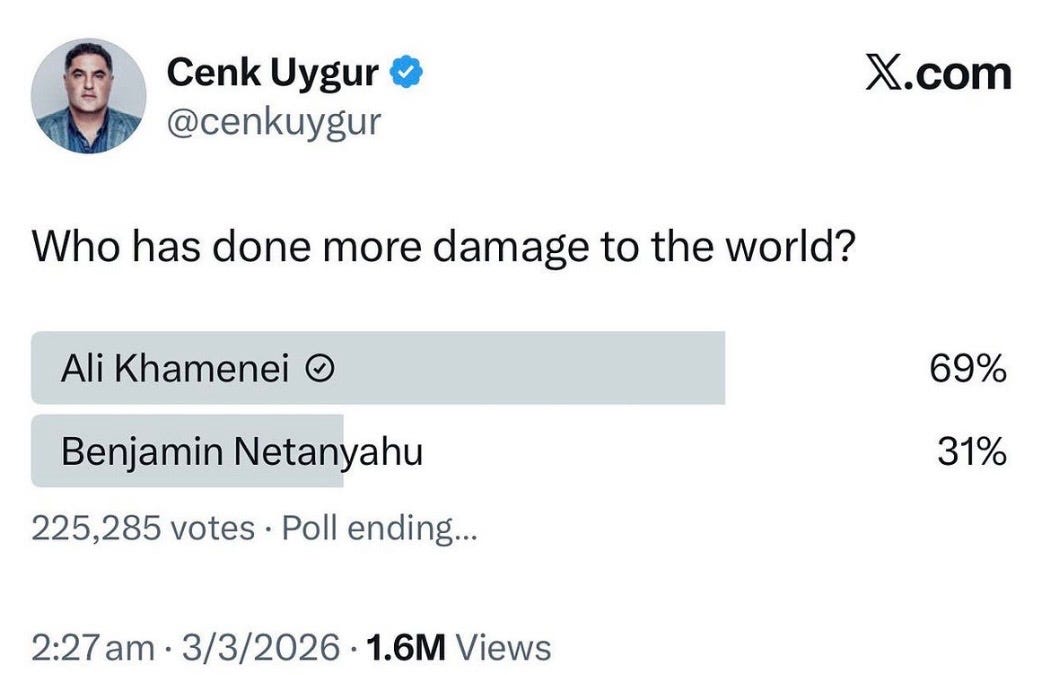
When political commentary erases fundamental moral distinctions, it does more than provoke — it corrupts judgment. A recent poll by Cenk Uygur asked who has done more damage to the world: Ali Khamenei or Benjamin Netanyahu. The question was not bold. It was unserious. Preposterous.
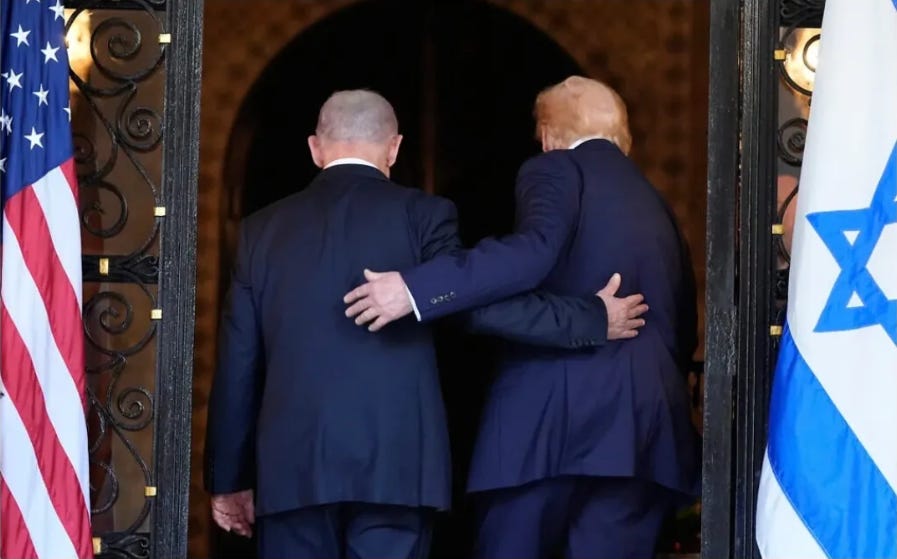
Benjamin Netanyahu is the legitimately elected Prime Minister of Israel, our number one ally internationally, a multiparty democracy with competitive elections, fragile coalitions, an assertive judiciary, and a press that often treats him with open hostility. He can be voted out. He can be prosecuted. He can be forced from office by the collapse of his own governing majority. Hundreds of thousands of Israelis have protested him in the streets without being imprisoned or shot. Agree or disagree with his policies — and many Israelis do — he governs within a constitutional framework designed to limit power and permit peaceful change.
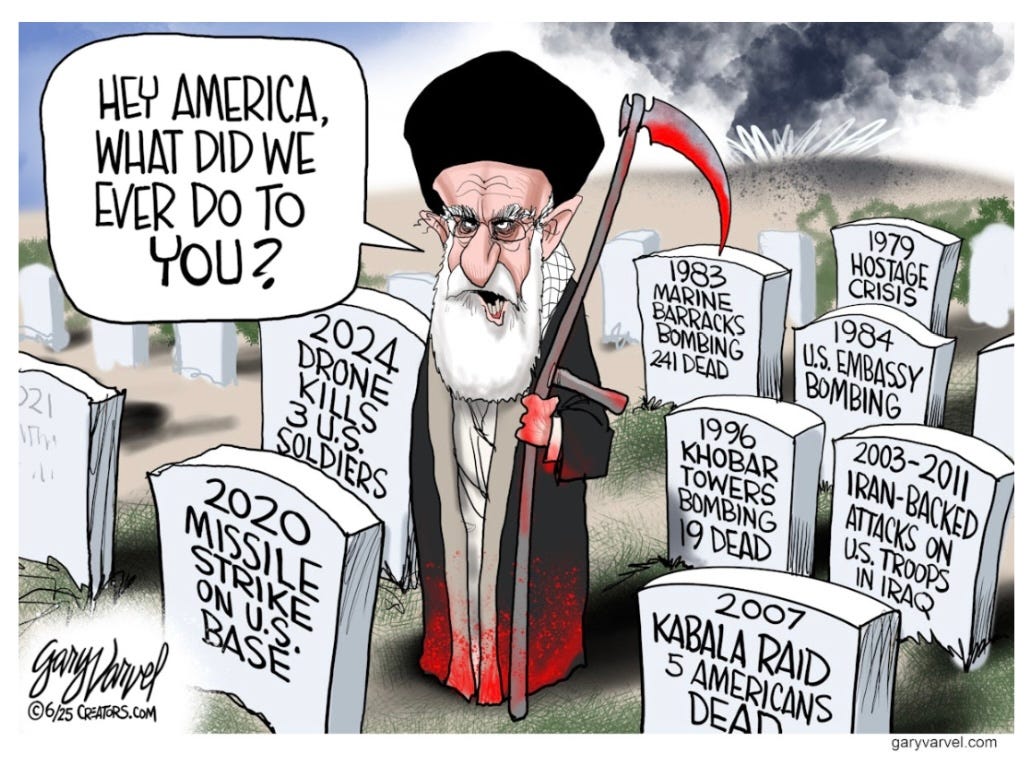
The Ayatollah Khamenei, by contrast, was the unelected Supreme Leader of the Islamic Republic of Iran, a theocratic regime where sovereignty flowed not from citizens but from clerical authority. Iran’s leadership jailed dissidents, tortured political prisoners, suppressed women, persecuted religious minorities, and crushed protest movements with lethal force. Elections were a farce, outcomes pre-engineered. The regime armed terrorist proxy militias across the world and embedded hostility toward the United States and our number one ally Israel into its governing ideology. “Death to America” wasn’t an accidental slogan — it was a ritualized expression of state-sanctioned hate against us. Hundreds of Americans, not to speak about thousands of Israelis and many others, have been killed by Iran and its proxy terror goons since 1979.
To place these two figures on the same moral plane is not nuance. It is vile category error. Democracies make mistakes. Democratic leaders can pursue policies that may deserve fierce criticism. But they remain accountable to voters and constrained by institutions. Authoritarian theocracies, on the contrary, are accountable only to themselves. Something an immigrant to the US like Uygur should have very clear in his mind.
While we must agree that all democracies are flawed, being serious requires acknowledging that a flawed democracy and a repressive theocracy are not comparable actors on the world stage. Precision matters. Proportion matters. Without them, in this case, analysis devolves into evil performance. And worse.
The timing makes the comparison even more intolerable. The United States, alongside our top ally Israel, is presently engaged in justified military operations against the Islamic Republic of Iran. Though not a formally declared war, it is an armed confrontation involving American personnel and strategic assets. American soldiers are dying. Our sailors and pilots are in deadly danger. In such a moment, framing America’s number one democratic ally as morally equivalent — or worse — than the terror regime our forces are actively countering is not courageous dissent. It is a disrespectful distortion that muddies moral clarity during a national security crisis and sides with our opponents chanting “Death to America”. From a naturalized US citizen like Uygur, patriotism must be demanded at a moment like this.
Robust debate is the lifeblood of democracy. Americans are free to criticize allies, question strategy, and oppose military action. That freedom is worth defending. But freedom of speech does not exempt speech from judgment. When commentary blurs the line between elected governments and authoritarian regimes at a moment of conflict America is actively involved in, it ceases to be insightful and becomes inflammatory. Even worse. It is treasonous. Coming from an immigrant like Uygur, who has done so well for himself since arriving in our country, it sends to other immigrants a message of disrespect for America that hampers assimilation at a time of justified tensions on this issue.
Again: moral distinctions are not propaganda; they are prerequisites for coherent debate, for moral civic life and for conducting foreign policy. If we allow activists like Uygur to blur the line between democratic accountability and theocratic repression, we erode the very standards that make democratic self-government possible. Plus if we allow this at a time when our country is directly fighting that theocracy, we help him and others like him erode the pillars of our Republic and insult our fellow US citizen warriors deployed abroad to fight for our national interests.
If un-American provocation bordering treason surely generates clicks, only clarity countering it sustains constitutional republics like ours.
As a naturalized US citizen myself, I am definitely tired of having immigrants like Uygur and first-generation-Americans like his nephew Hasan Piker undermining our country like this daily.
Aren’t you?

Great piece and very true. This is why we need to close the borders to everyone for at least 20years
I couldn't agree more. But if you believe Glenn Greenwald (I am not sure what to believe), there is bad news:
Support for Israel in the US Has Collapsed, Radically — and Finally — Opening the Debate
https://greenwald.substack.com/p/support-for-israel-in-the-us-has