
Which Murals Are Allowed?
When Public Art Becomes Narrative Control...

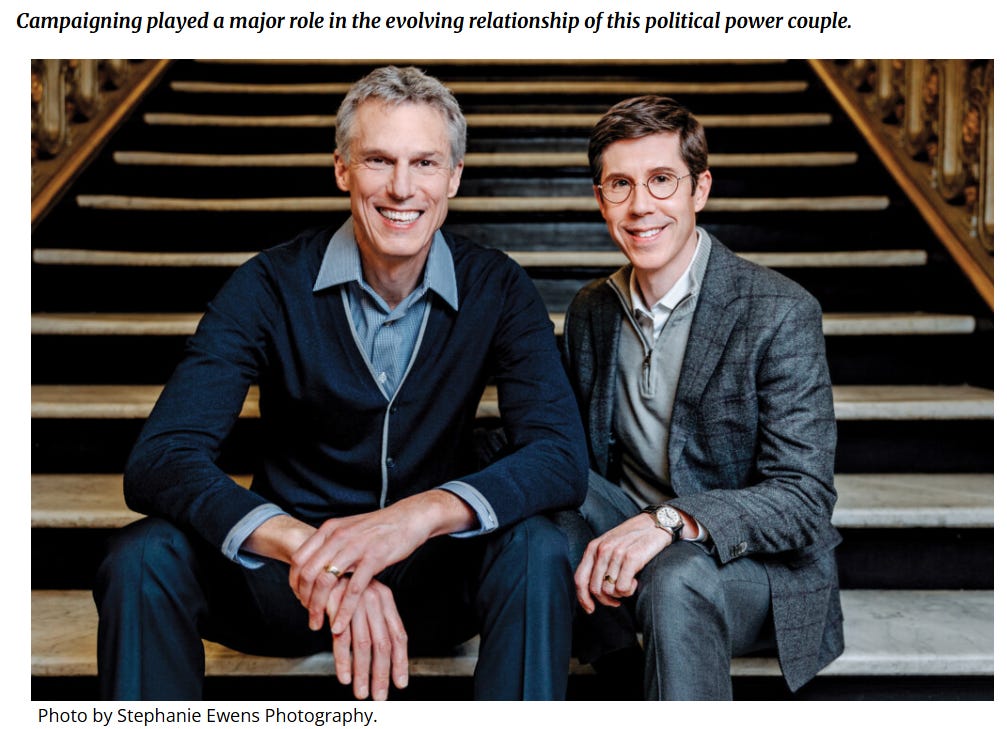
Captioned photo of Providence (RI) Democrat Mayor Brent Smiley (right) and husband Jim DeRentis (the “political power couple”) on a 2024 piece about falling in love in Providence, by magazine Rhode Island Monthly. In 2026, Democrat Mayor Brent Smiley says the Iryna Zarutska mural should be taken down because it is ‘divisive’ and ‘not representative’ of Providence people. By running for mayor, he obviously believes he is indeed ‘representative’ of Providentians. He also believes he decides what represents them and what not. How cute.
Public art is not neutral. It is power.
It tells people what matters—and just as importantly, what does not.
In recent years, murals honoring George Floyd appeared across the United States—and even on US embassy walls abroad. They were elevated, protected, and presented as symbols of national reflection.
Now, in Providence (RI), a mural honoring Iryna Zarutska is being dismissed as “divisive” and “misguided” precisely by the Democrat Mayor.
Same country. Same public space. Completely different treatment.
This is not about art.
It is about narrative control.
One story is amplified because it fits a political framework—one that has been pushed relentlessly for years across institutions, media, and public spaces. It suits the Democrats’ narrative.
The other story does not fit. It undermines Democrat policies. So it is questioned. Minimized. Removed.
That is not representation. That is selection.
And selection is power.
Americans are told these decisions reflect “the community.” But increasingly, it is clear that what is being reflected is not the community—it is the priorities of those who claim to speak for it.
Because when one story is elevated and another is dismissed, the message is unmistakable:
Some stories matter more than others.
Not because of what happened. But because of how they fit the Democrats’ narrative.
And once that standard takes hold, public space stops belonging to the people.
It belongs to those who decide which stories are allowed to be seen.
Against an organic exercise of freedom of expression, we have a political move to assert narrative control.
Is it even acceptable at all for Mayor Smiley to say what is representative or not of Providentians?
He’s not making an observation. He’s imposing his political line.
If you want to understand the forces shaping our world—and not be misled by them—that’s exactly what ForeignLocal is here to do.
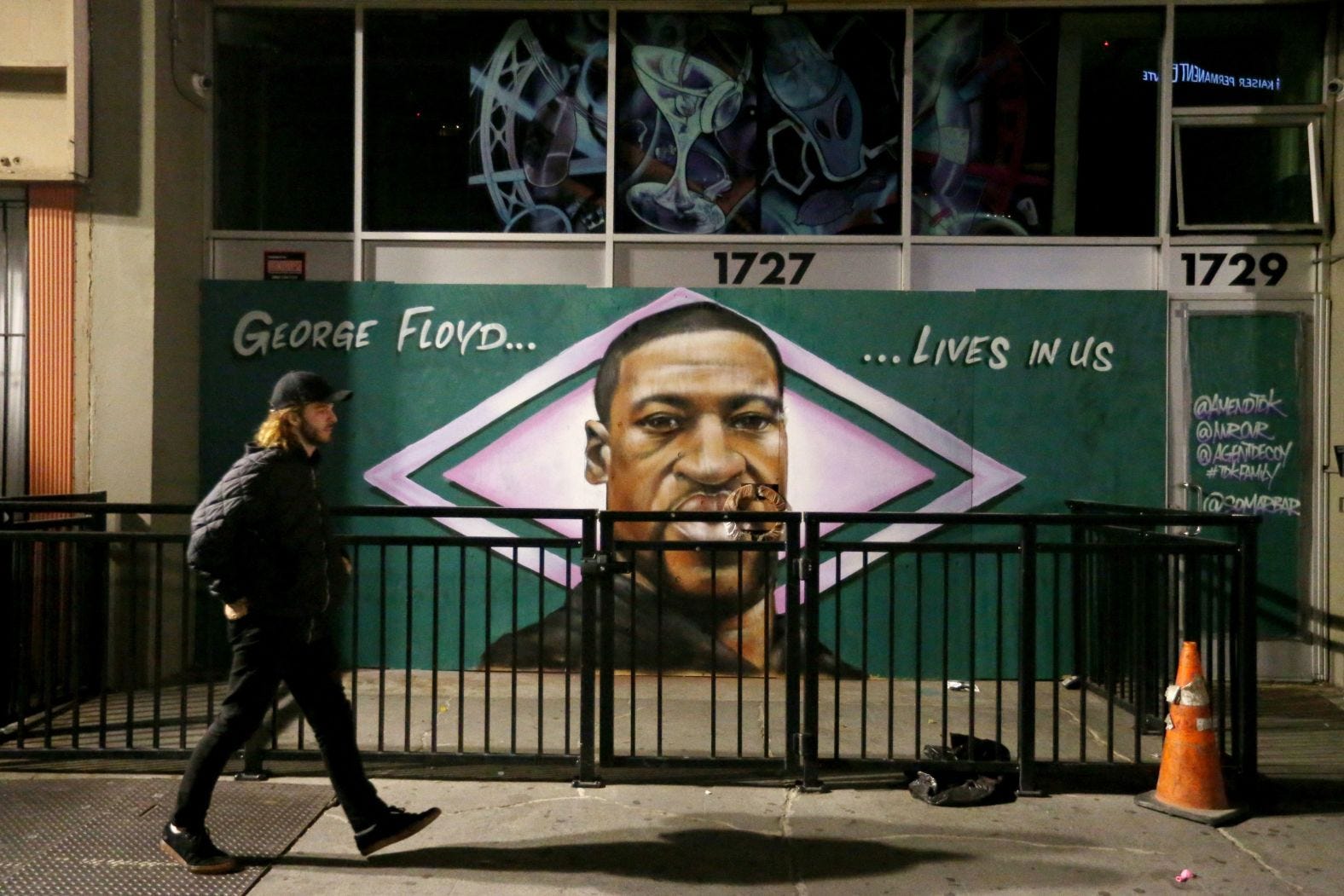
This fits the Democrats’ narrative…
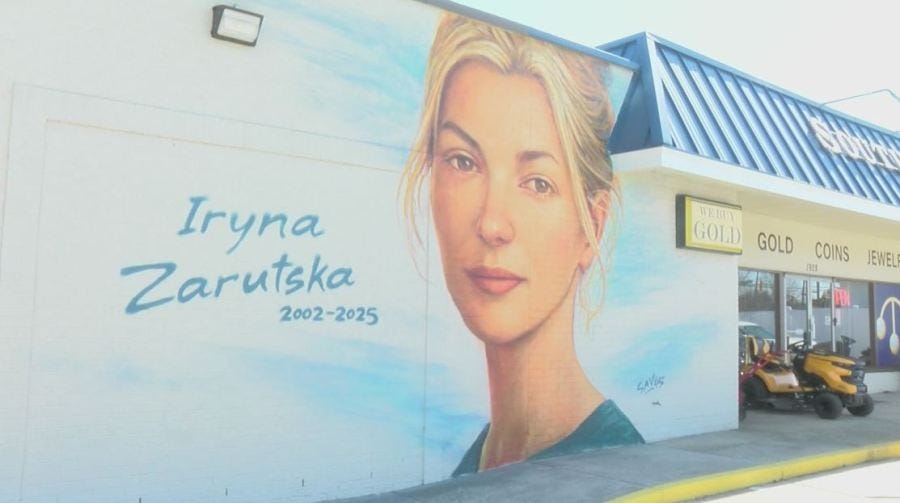
This obviously doesn’t…
P.S. If you enjoy the ForeignLocal posts, please become a paid subscriber today. Your support means a lot and helps keep these stories coming. Thank you!
Smiley’s take on the mural is very sad. I feel sad for Providence
Neither public art or who can and can’t be memorialized should be determined by politics or narrative control. Iryna deserves a mural to remember her because the local and state governments ignored her brutally racially motivated murder by a deranged black man. George Floyd doesn’t deserve a mural. He wasn’t killed by the police. He died of a drug overdose compounded by a bad heart. How about this? Instead of honoring fake victims like George Floyd, we honor American heroes in our public art like George Washington, Thomas Jefferson, Andrew Jackson, Abraham Lincoln, Theodore Roosevelt, Christopher Columbus, Robert E. Lee, Davy Crockett, Fredrick Douglass, Harriet Tubman, Susan B. Anthony, Clara Barton, Helen Keller, Thomas Edison, Alexander Graham Bell, Mark Twain, The Wright Brothers, Jackie Robinson, Dr. Martin Luther King, Jr., Dwight D. Eisenhower, George C. Marshall, Neil Armstrong, Walt Disney, Theodor “Dr. Suess” Geisel, Albert Einstein, Dr. Jonas Salk, Cesar Chavez, Fred Korematsu, Audie Murphy, Chesty Puller, and Pat Tillman. Also on a side note, no I do not believe those phony Me Too allegations made against Chavez by Delores Huerta and the New York Times and shame on on all these people seeking to erase him from American society!