
Trump Island
The strategic Albanian island that spent 2,000 years changing hands.

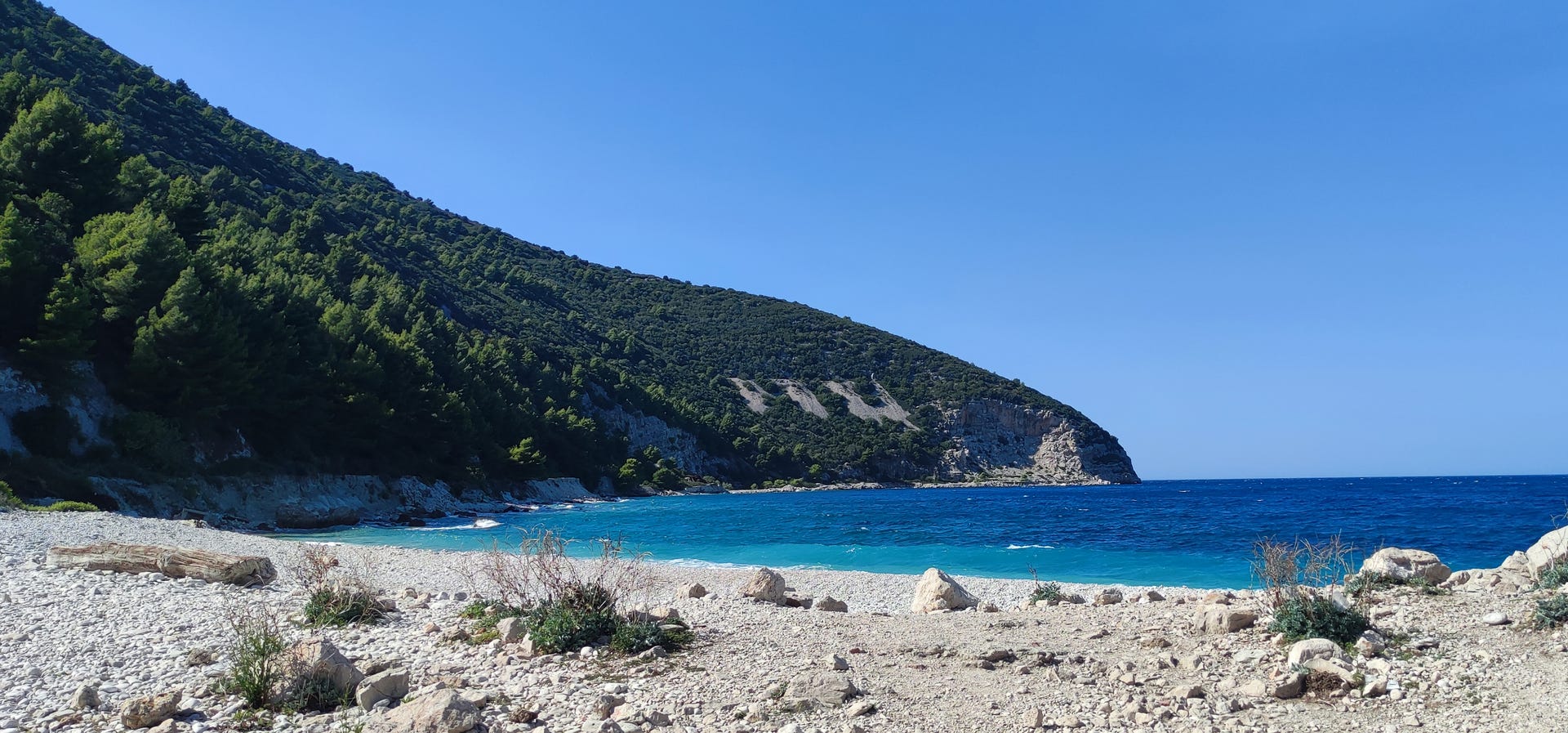
Saint Nicholas’ Bay on Sazan Island, a former military base in Albania’s Adriatic coast. (Photo: Hotolmo22).
Many Albanians already call it “Trump Island” with understandable pride.
Others think this is the least interesting thing about the island.
The nickname emerged after plans linked to Jared Kushner and Ivanka Trump proposed transforming Sazan Island into a luxury tourism destination. The project has sparked logical enthusiasm—but also protests, environmental concerns, and political controversy in NATO ally Albania.
Yet the real story of Sazan began long before luxury resorts, American politics, or even the United States itself came into existence.
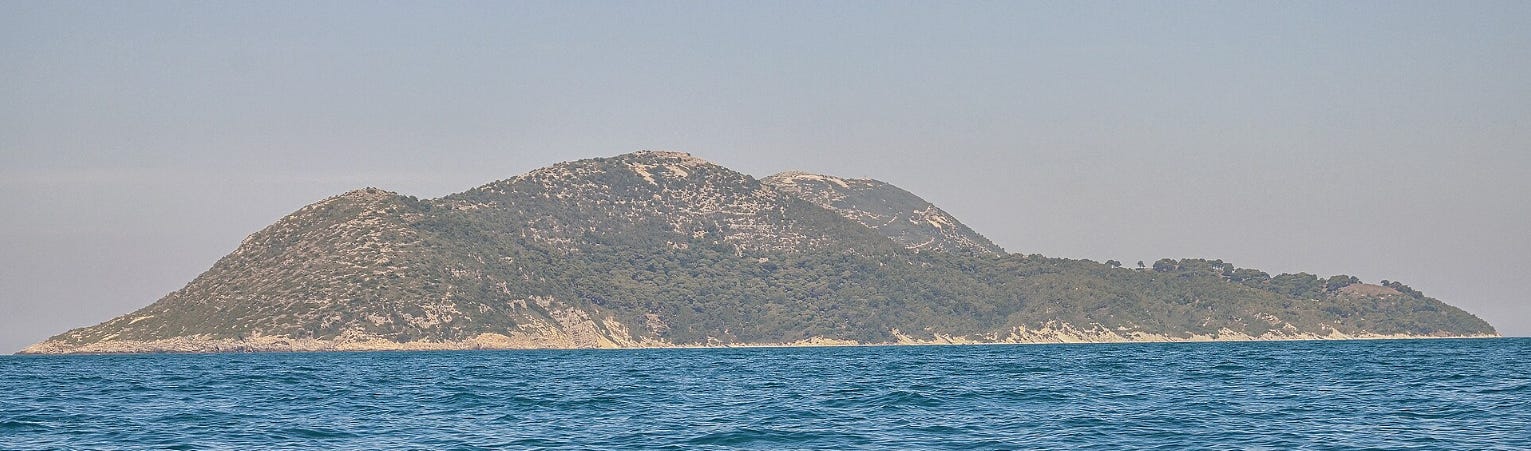
The tiny island sits at the entrance to the Adriatic Sea, guarding the strategic waters between the Balkans and Italy.
For more than 2,000 years, nearly every major power in the Mediterranean wanted it.
The ancient Greeks knew it as Sason.
The Romans called it Saso.
It later became part of the Byzantine Empire.
Venetians controlled it.
Albanian rulers governed it.
The Ottomans turned it into a naval outpost.
The British briefly controlled it after the Napoleonic Wars.
Italy occupied it in the 20th century.
German and Italian submarines operated from there during World War II.
Under Communist Albania, it became a heavily fortified military zone packed with bunkers and Soviet-built military infrastructure.
At one point, thousands of soldiers were stationed on an island measuring barely 2.4 square miles—awaiting a beach assault that was real only on Albanian dictator Enver Hoxha’s mind.
Not bad for a place most people have never heard of.
What makes Sazan fascinating is not its size.
It is its location.
Geography often explains history better than politics.
Sazan sits near the Strait of Otranto, the narrow entrance connecting the Adriatic Sea to the wider Mediterranean.
Control the island and you gain a commanding position over one of the region’s most important maritime routes.
That strategic reality attracted Greeks, Romans, Venetians, Ottomans, Italians, Albanian Communists, and now famous American visionary developers.
The players changed.
The geography did not.
Like Beaufort Castle in Lebanon, Sazan demonstrates a simple truth:
Technology changes.
Geography remains.
Today, the island stands empty.
The soldiers are gone.
The submarines are gone.
The Cold War ended long ago.
Yet history may be preparing another chapter.
Whether the Trump-linked development proceeds or not, Sazan has once again become the object of international attention.
And that seems entirely appropriate.
For more than two millennia, this small island has spent its existence being discovered, conquered, fortified, abandoned, and rediscovered by successive generations.
Empires came and went.
Republics replaced monarchies.
Submarines replaced sailing ships.
Developers may replace soldiers.
Yet Sazan remains where it has always been.
Standing guard over the entrance to the Adriatic—waiting for the next chapter in its remarkable history.
One that perhaps only visionary developers like the Kushner-Trump could have rescued from oblivion.
Supporters see an opportunity to transform a forgotten Cold War outpost into one of the Mediterranean’s most remarkable new destinations.
If it works, Sazan’s next chapter may prove every bit as consequential as those that came before it.
Want to support ForeignLocal? Become a paid subscriber today… or buy me a coffee here. Thanks much.
Trump realizes the importance of choke points and strategic geography.
Interesting concept, there’s literally dozens of similar “opportunities” throughout the Adriatic area, even a few with the abandoned military infrastructure vibe too(Croatia.) Sazan has no current functioning infrastructure, i.e. power and water, and it would take years, if not decades to develop. Regardless, geography is fascinating.