
The Line Washington Drew
And which “our allies” chose to dangerously blur...

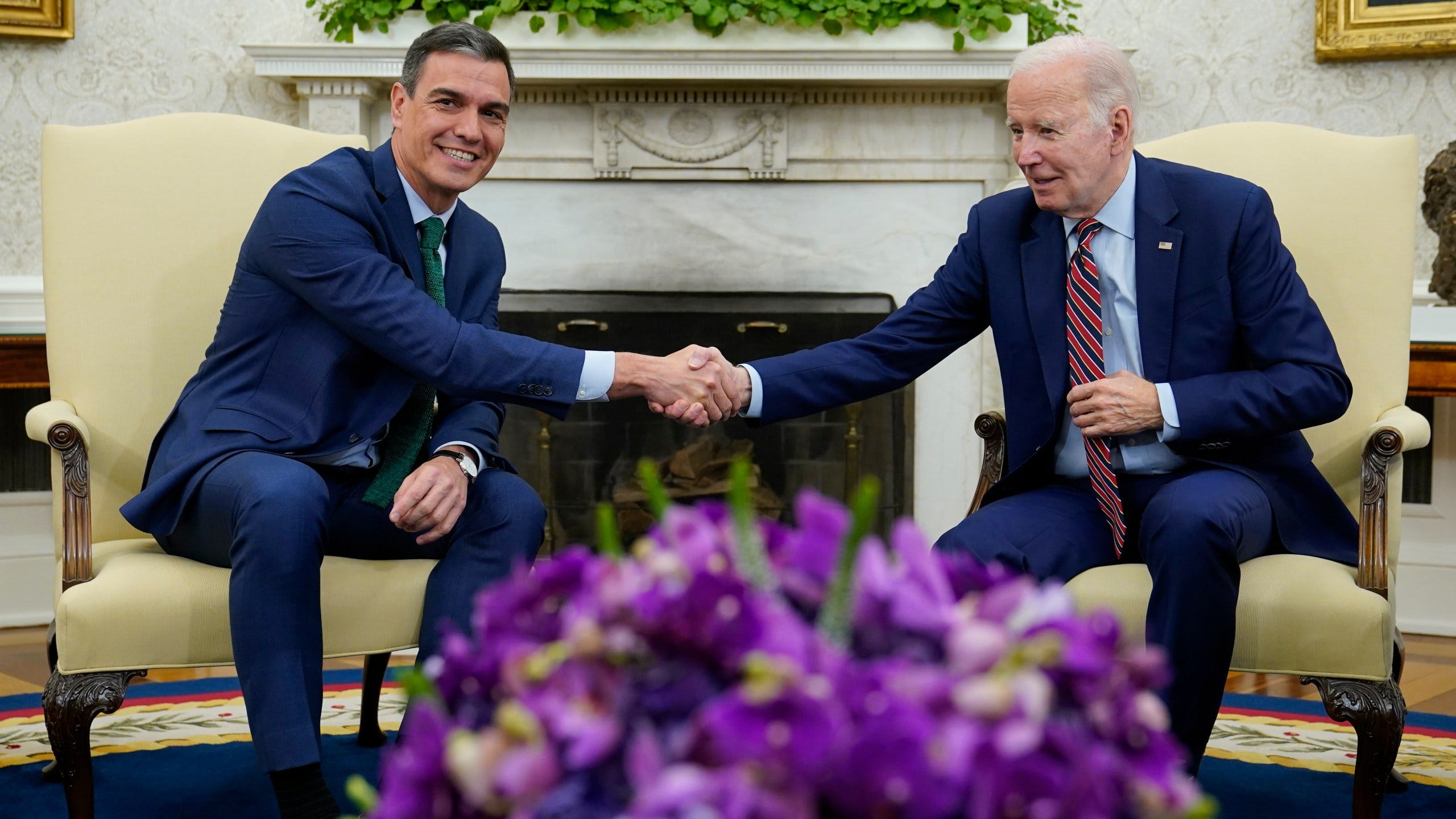
Socialist Spanish PM Pedro Sanchez at the Oval Office with braindead President Joe Biden.
The United States had already made its position clear.
In the US, companies like China Railway Construction Corporation (CRCC) had been formally restricted by the federal government—flagged during the Trump–Pence administration for links to the Chinese military and for their role in strategic infrastructure projects tied to broader CCP ambitions.
That was not yesterday.
It was years ago.
And yet—
Elsewhere in the Western system, that same line looks very different still today.
In Spain, the Chinese state-backed ecosystem has not only remained present, it has been integrated. Through its acquisition of the Spanish builder Aldesa, CRCC maintains an active presence in Spain, where its subsidiary—despite financial difficulties—remains operational and continues to participate in public infrastructure projects.
This is not an isolated case.
Across other NATO countries in Europe—and to a lesser degree in Canada—Chinese state-linked firms are not categorically banned. They are scrutinized, sometimes limited, occasionally blocked. But not treated with the same level of finality seen in the United States.
The result is a growing divergence.
Not in rhetoric.
But in practice.
What we in Washington DC treat as a strategic risk,
our “allies” still treat as a commercial opportunity—
even when those entities are tied to the CCP’s broader ambitions.
This is not about China as a country or its people.
It is about how the CCP projects influence through state-linked companies.
That difference matters.
Because alliances are not defined by statements.
They are defined by decisions.
And when those decisions diverge on something as fundamental as who builds your infrastructure, who finances your companies, and who gains access to your strategic sectors—
alignment becomes harder to claim.
If shared threats are not seen as common,
alignment becomes a formality—not a reality.
That is not an abstract risk.
It is a policy reality.
During the Biden–Harris administration, Washington continued to treat governments like that of Spanish Socialist PM Pedro Sanchez as reliable partners—despite clear signs of strategic divergence.
That was a dangerous misread.
Because alignment is not declared.
It is demonstrated.
When companies linked to CCP-aligned industrial networks continue to operate with public backing…
When governments explore deeper engagement with China’s role in shaping the international order…
And when, at the same time, they decline to support US-led efforts in moments of crisis—
the pattern becomes impossible to ignore.
This is not about personalities alone.
It is about political direction.
And such direction determines risk.
If parts of the Western system remain open to entities the United States had already identified years ago as strategic concerns,
then that exposure does not remain local.
It extends across the alliance itself.
Which leads to a simple question:
Are we still operating under a shared understanding of threat—
or are we already playing for different teams?
You tell me…
Foreign decisions. Local consequences.
Local decisions. Foreign consequences.
Most people don’t even see it happening.
If you want to understand the forces shaping our world—and not be misled by them—that’s exactly what ForeignLocal is here to do.
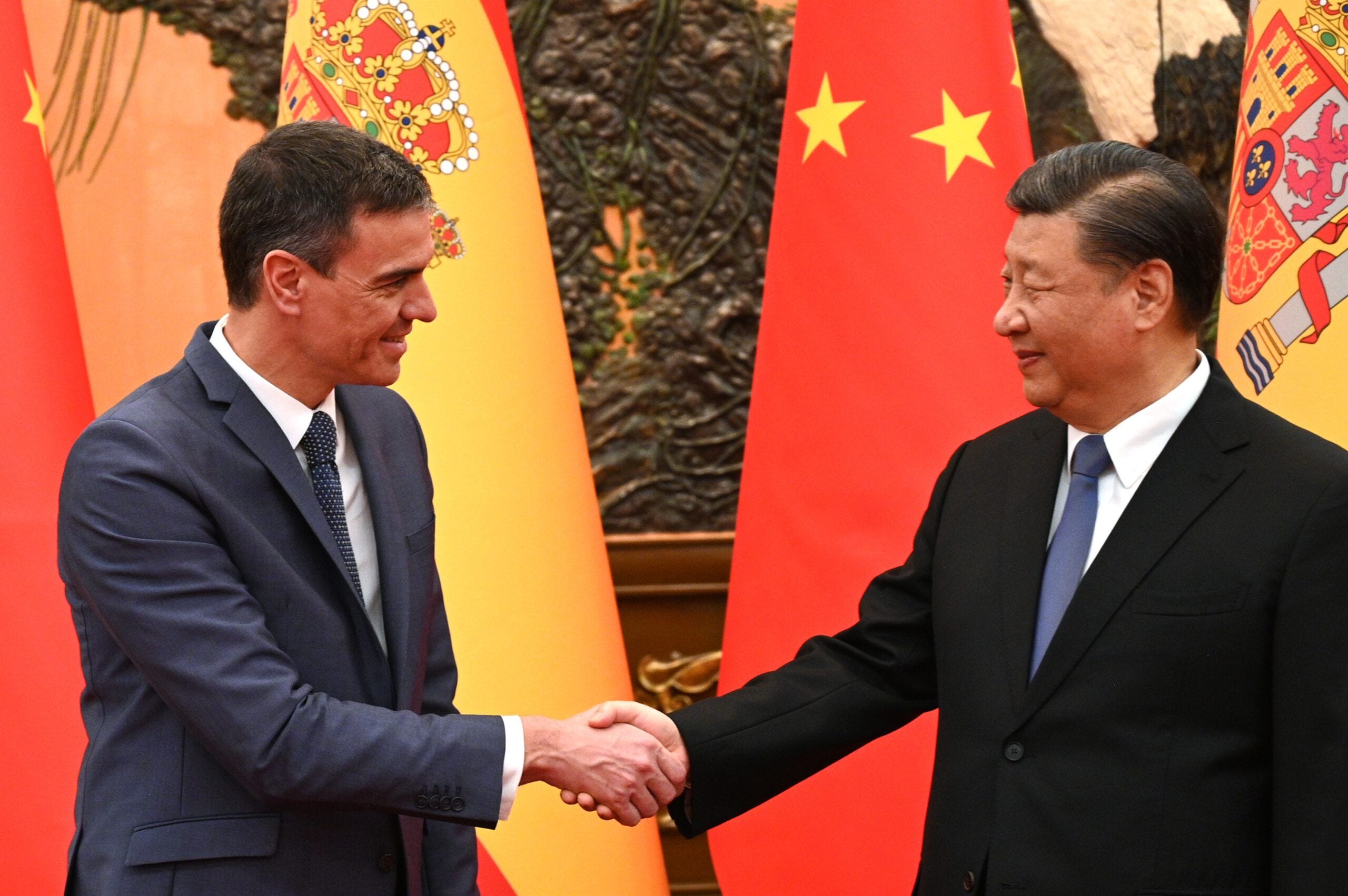
Socialist Spanish PM Pedro Sanchez greets his Supreme Leader, General Secretary of the Chinese Communist Party Xi Jinping.
P.S. If you enjoy the ForeignLocal posts, please become a paid subscriber before Pedro Sanchez learns to speak Chinese. Your support means a lot and helps keep these stories coming. Thank you! ☕ You can also buy ForeignLocal a coffee here.
We're playing on different teams. Europe can fend for itself. Trump's focus is on the Western Hemisphere.